In the current digital business environment, it is essential for organizations of various sizes to handle their documents efficiently. Regardless of whether they are small businesses, educational institutions, government organizations, or large enterprises, these entities handle a growing volume of both digital and physical documents every day. Managing documents manually can lead to misplaced files, prolonged searches, redundant records, and challenges in ensuring security.
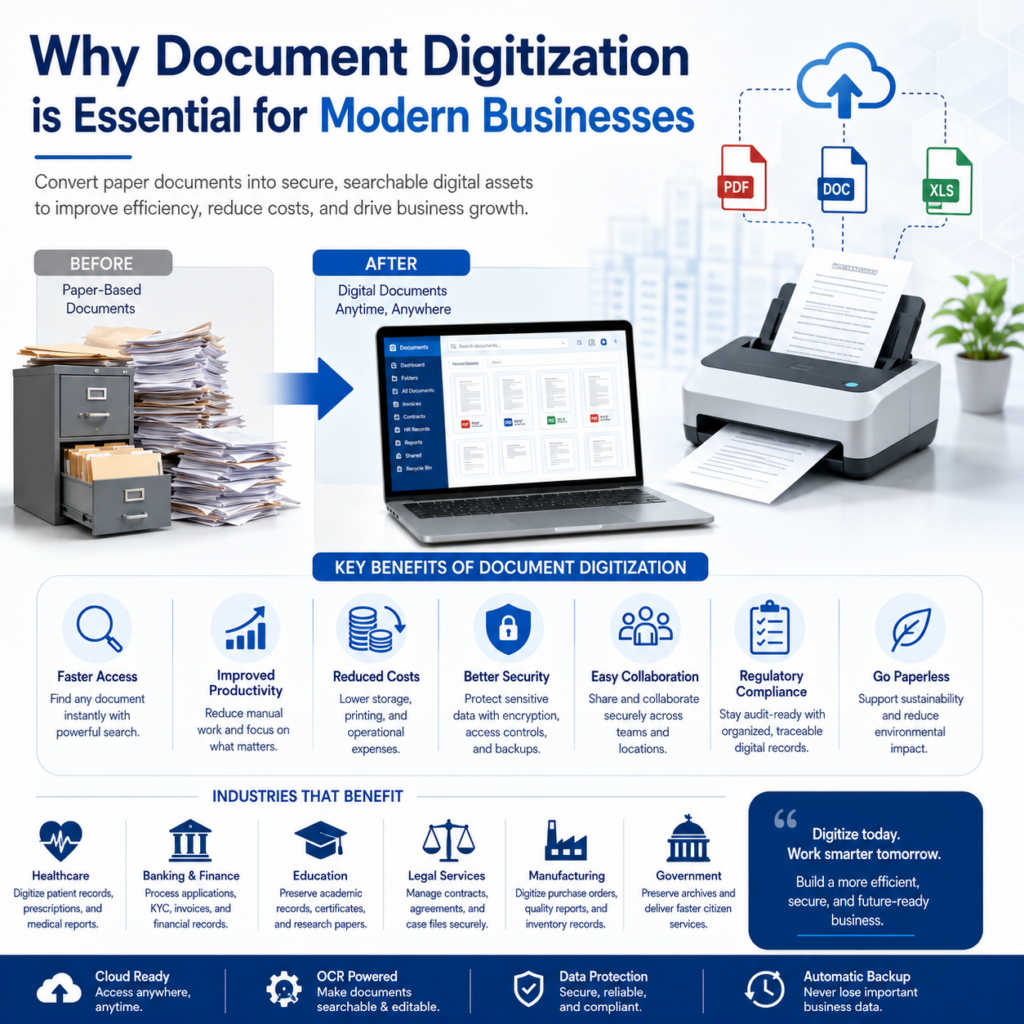
A Document Management System in India helps businesses in transforming, arranging, storing, accessing, and managing documents more effectively. Through the adoption of digital document management solutions, organizations can improve their workflow efficiency, increase productivity, and reduce dependency on conventional paper-based approaches.
What Is a Document Management System (DMS)?
A Document Management System (DMS) is a software solution enabling users to store, organize, manage, retrieve, and track digital documents via a unified platform. It helps companies handle documents throughout their complete lifecycle, beginning with creation and scanning, then proceeding to storage, sharing, archiving, and final disposal.
Why Is a Document Management System Important in India?
Businesses and institutions throughout India are gradually moving towards digital processes to enhance their operational efficiency. Despite this shift, a significant number of organizations continue to rely on paper-based systems, physical storage spaces, email attachments, and separate document storage solutions.
A Document Management System offers a solution to these issues by creating a well-organized digital platform for storing and handling documents.
Key Benefits of a Document Management System
1. Centralized Document Storage
A Document Management System (DMS) keeps documents in a well-structured digital space, allowing approved users to easily find the files they need.
Rather than looking through physical storage, email messages, or various folders, employees can retrieve documents from a single, unified platform.
2. Faster Document Search and Retrieval
Finding specific information across a large number of documents can be difficult without an effective system.
Document management software can assist users in locating relevant files quickly by using features such as metadata, document categories, indexing, and full-text search.
3. Improved Data Security
Business documents may contain confidential financial information, employee records, customer details, contracts, and other sensitive data.
4. Reduced Paper and Operational Costs
Paper-based document management involves printing, copying, storing physical copies, and handling documents manually.
By digitizing documents, organizations can lower these costs and utilize office space more effectively.
5. Better Collaboration and Workflow Management
Employees frequently have to look at, make changes to, give their approval for, or send documents to coworkers in various departments.
A Document Management System can make these tasks easier by offering features like managed document sharing, tracking changes, sending alerts, and setting up automatic approval processes, depending on what the system can do.
Document Scanning and Digitization
Document scanning converts physical paperwork into digital files. Digitization solutions can help organizations transform paper archives into accessible electronic records.
Optical Character Recognition (OCR)
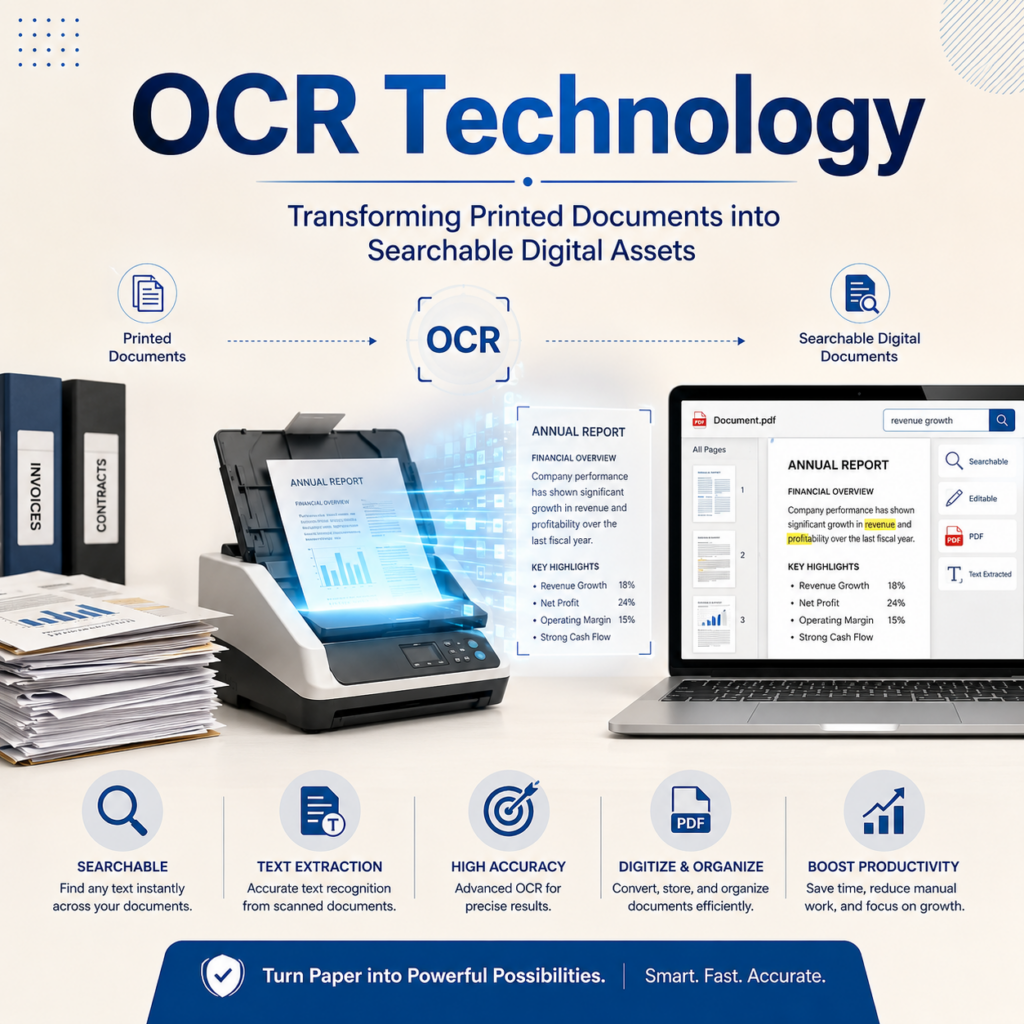
OCR technology extracts text from scanned documents and images. Depending on the OCR engine and document quality, it can make records searchable and reduce manual data entry.
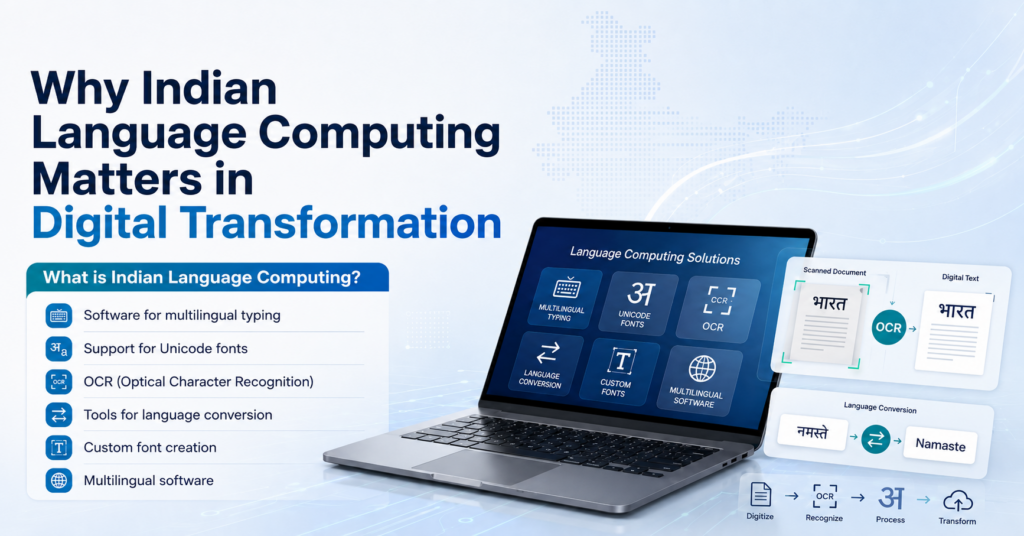
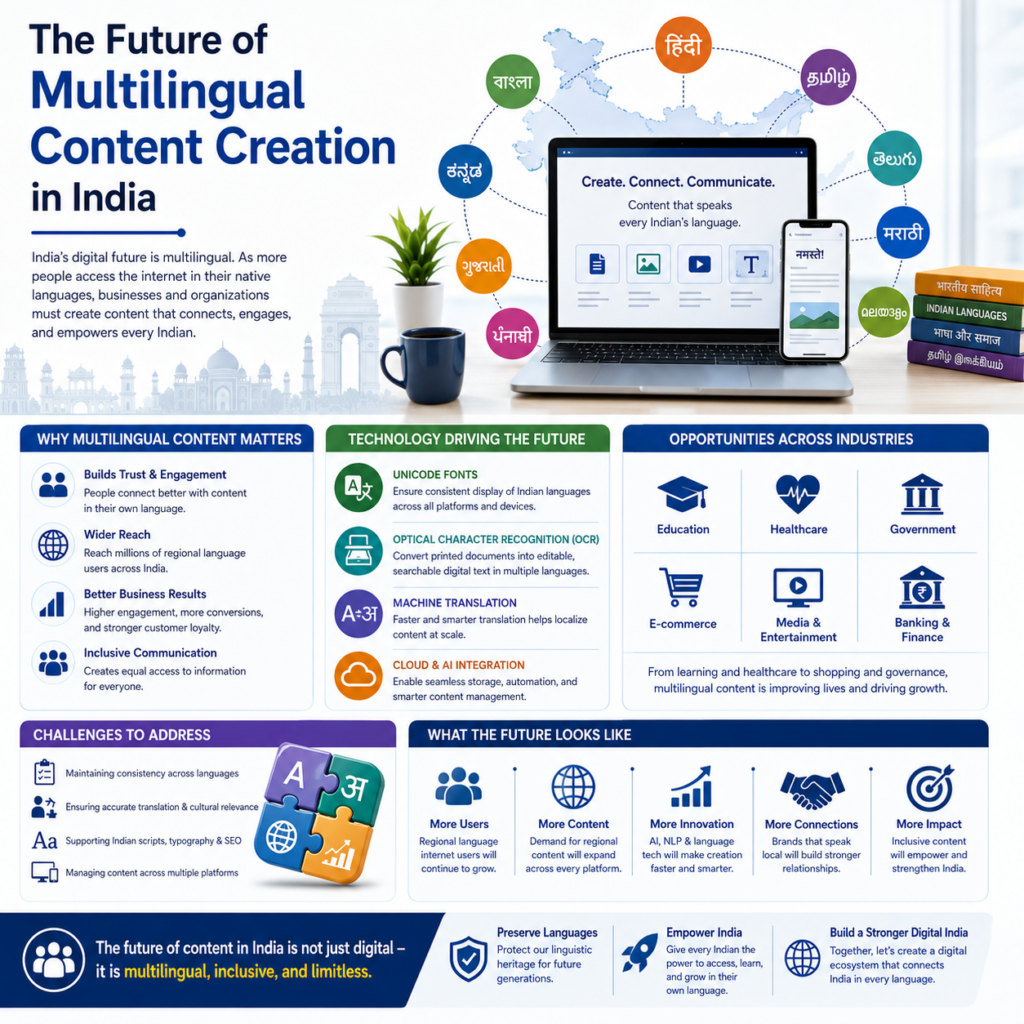
For Indian organizations, multilingual OCR capabilities may be particularly valuable when documents contain regional languages and different scripts.
Document Indexing and Search
Indexing organizes documents using information such as titles, dates, categories, reference numbers, and keywords.
Full-text search and metadata-based search help users locate documents more efficiently.
Access Control and Audit Trails
Access controls help ensure that users can view or modify only the documents permitted by their roles.
Audit trails can record relevant activities, supporting accountability and document governance.
Workflow Automation
Workflow automation helps manage repetitive processes such as invoice approvals, contract reviews, employee onboarding, and document verification.
Automated workflows can reduce manual follow-ups and improve process visibility.
Backup and Recovery
Reliable backup and recovery processes help organizations protect important records against accidental deletion, system failures, and other disruptions.
Businesses should understand the provider’s backup frequency, recovery procedures, and data storage arrangements.
Integration Capabilities
A DMS may need to work with existing business applications, including ERP, CRM, accounting, email, and enterprise workflow systems.
Evaluating integration options can help prevent information silos and reduce duplicate data entry.
Document Management System vs. Traditional File Management
Traditional file management often relies on physical documents, shared folders, spreadsheets, and manual tracking.
A Document Management System offers a more structured approach to organizing and controlling business records.
| Feature | Traditional File Management | Document Management System |
| Document storage | Physical files and scattered folders | Centralized digital repository |
| Search | Often manual | Search using metadata and, where supported, document content |
| Access control | Limited or manually managed | Configurable user permissions |
| Version tracking | Often manual | Version control, depending on the software |
| Workflow | Paper-based or email-driven | Digital workflows and approvals |
| Audit history | Difficult to maintain consistently | Audit trails, depending on the solution |
| Accessibility | Depends on physical location or shared folders | Depends on system configuration and user permissions |
| Scalability | Can become difficult as records increase | Can support growing document volumes, depending on architecture |
Industries That Benefit from Document Management Systems in India
How OCR and Document Digitization Improve DMS Performance
Optical Character Recognition plays an important role in modern document digitization.
When organizations scan paper documents, the resulting files may initially contain only images. Without text recognition, users may need to open each document individually to identify its contents.
OCR converts recognized text within scanned images into machine-readable text. When combined with indexing and search functionality, it can help organizations:
The Future of Document Management in India
Document management is evolving beyond basic digital storage. Technologies such as OCR, workflow automation, and advanced search are creating new opportunities for businesses.
AI-assisted document processing may help classify files, extract relevant information, identify document types, and support information retrieval. The effectiveness of these capabilities depends on the technology, document quality, and implementation.
As Indian organizations continue to digitize their operations, the demand for efficient document storage, multilingual information processing, and searchable digital archives is likely to remain important.
Why Consider Modular Infotech for Document Digitization and Language Technology?
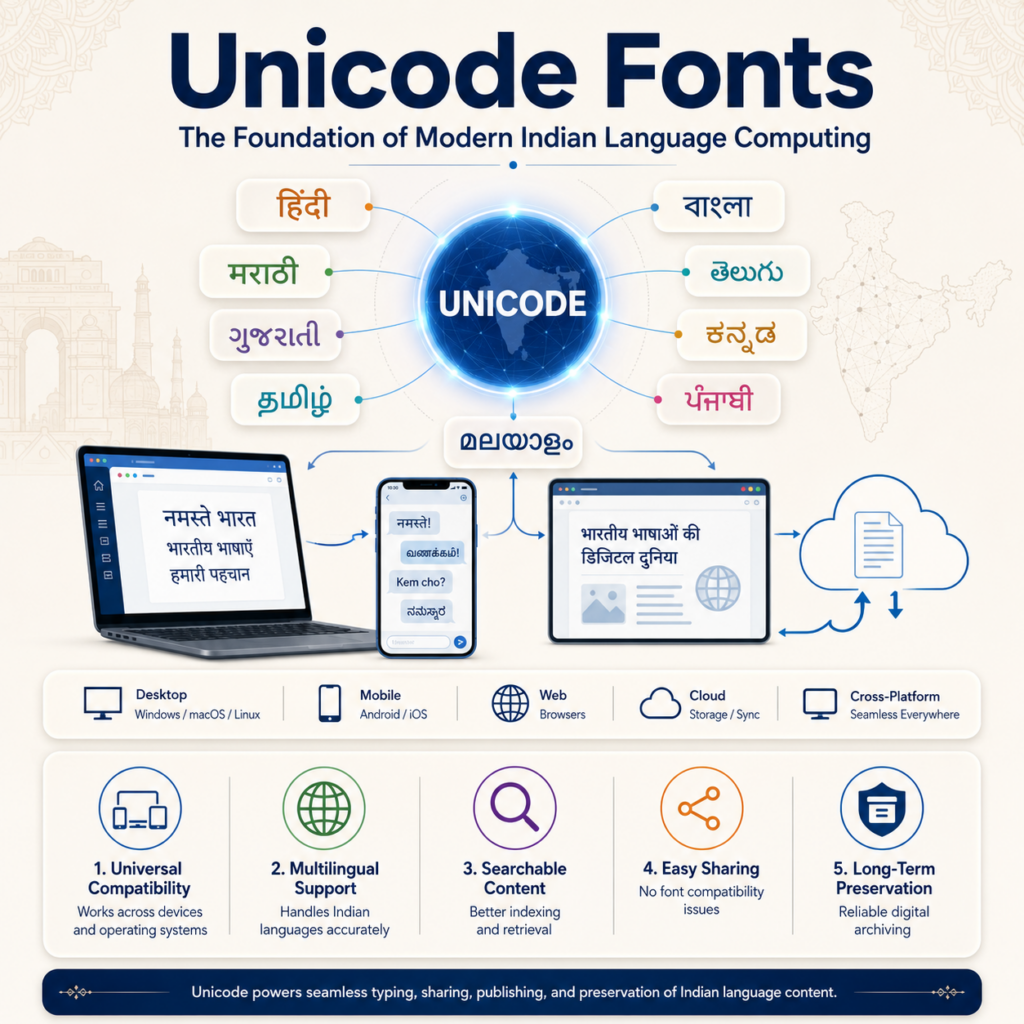
Managing digital documents effectively often requires more than storage. Organizations may also need solutions for document conversion, multilingual text processing, font compatibility, and access to information contained in scanned records.
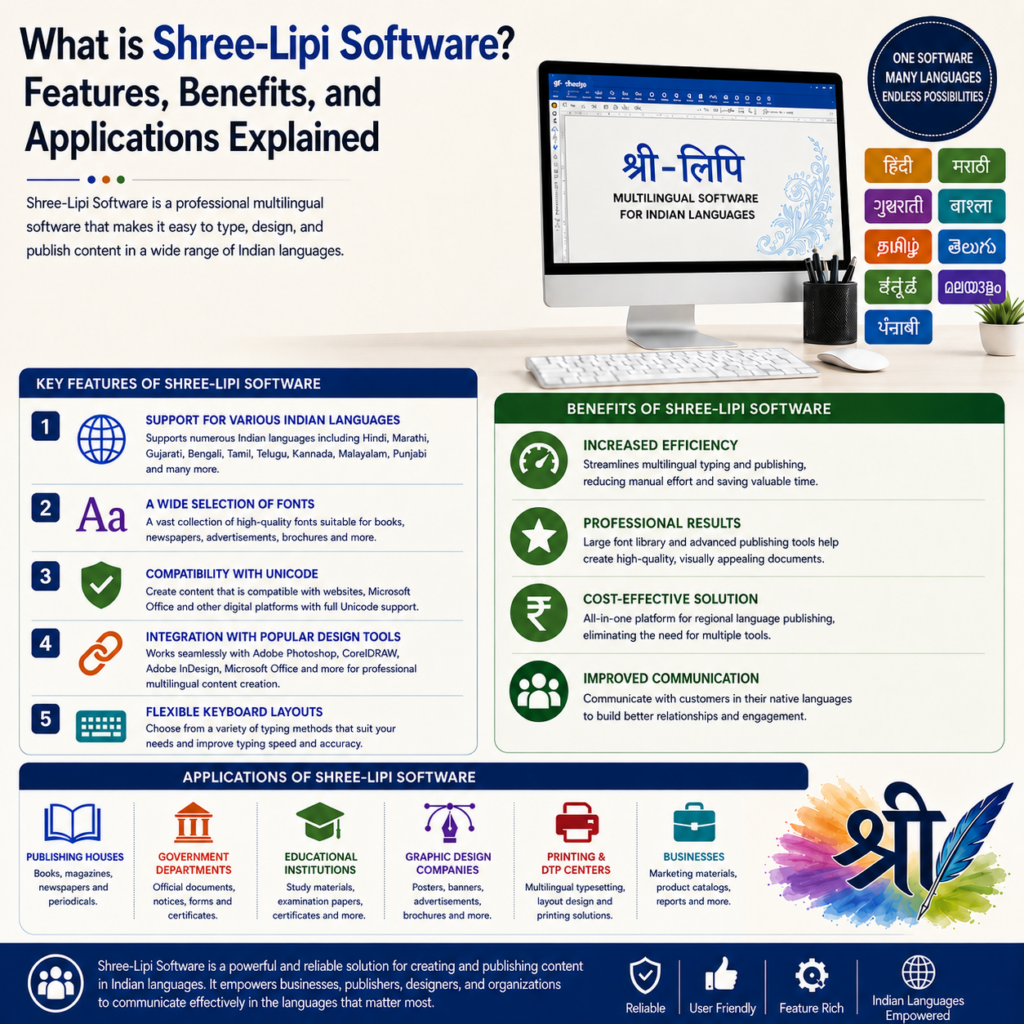
Modular Infotech provides language technology and software solutions, including Shree-Lipi and related Indian-language tools. Depending on your project requirements, these technologies may be relevant to multilingual document workflows, language processing, and digital publishing.
Conclusion
A Document Management System in India can help businesses and institutions organize records, improve document search, reduce paper-based processes, and establish more controlled digital workflows.
Ready to explore Indian-language technology solutions?