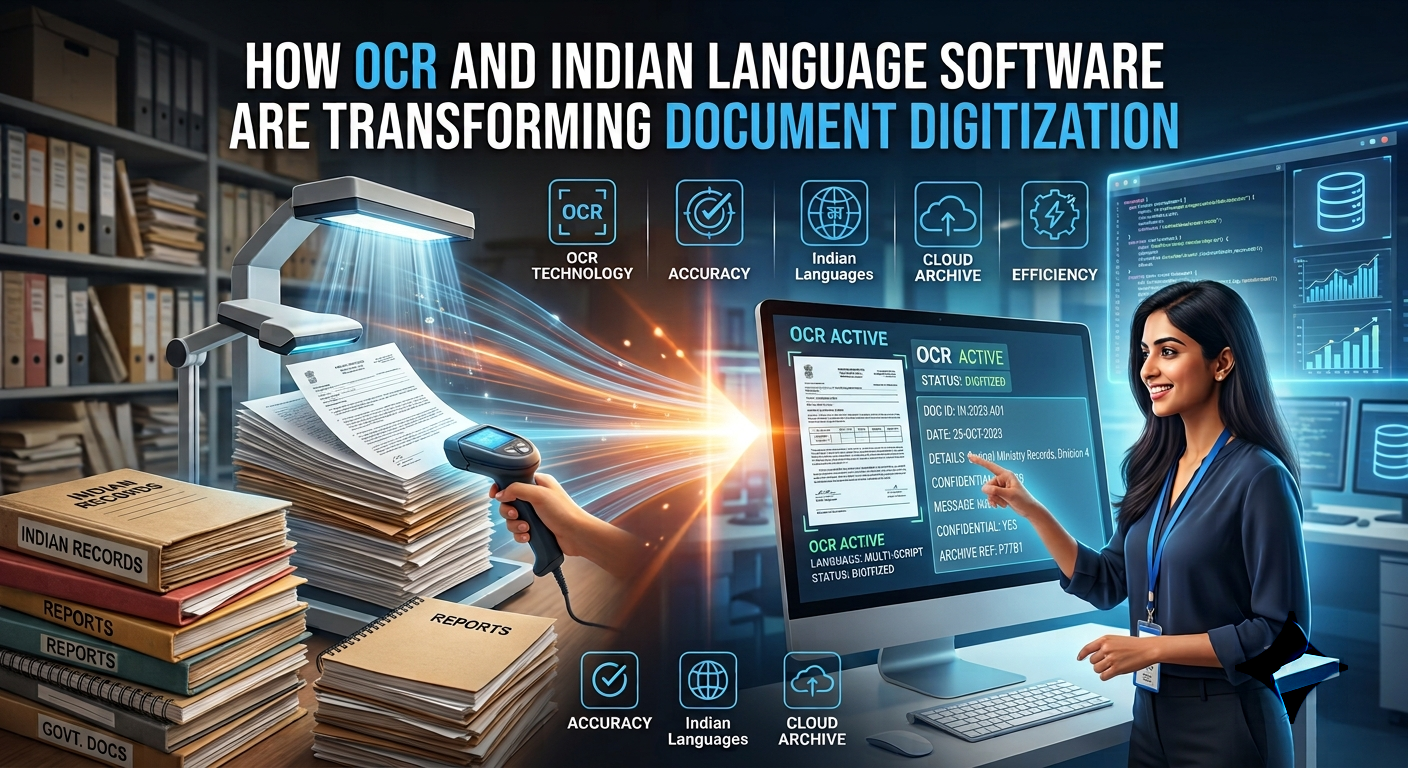
India generates an enormous volume of paperwork every single day — legal records, land documents, banking forms, school certificates, government files, and business correspondence, much of it written in Hindi, Marathi, Gujarati, Tamil, Bengali, and dozens of other regional scripts. For decades, converting this mountain of paper into searchable, editable digital text was slow, expensive, and often inaccurate. That is changing fast, thanks to major advances in Optical Character Recognition (OCR) and Indian language software built specifically for the country’s diverse scripts.
This post looks at how these two technologies work together, why they matter for Indian businesses and institutions, and what to look for when choosing a document digitization solution.
What Is OCR and Why Does It Matter for Indian Documents?
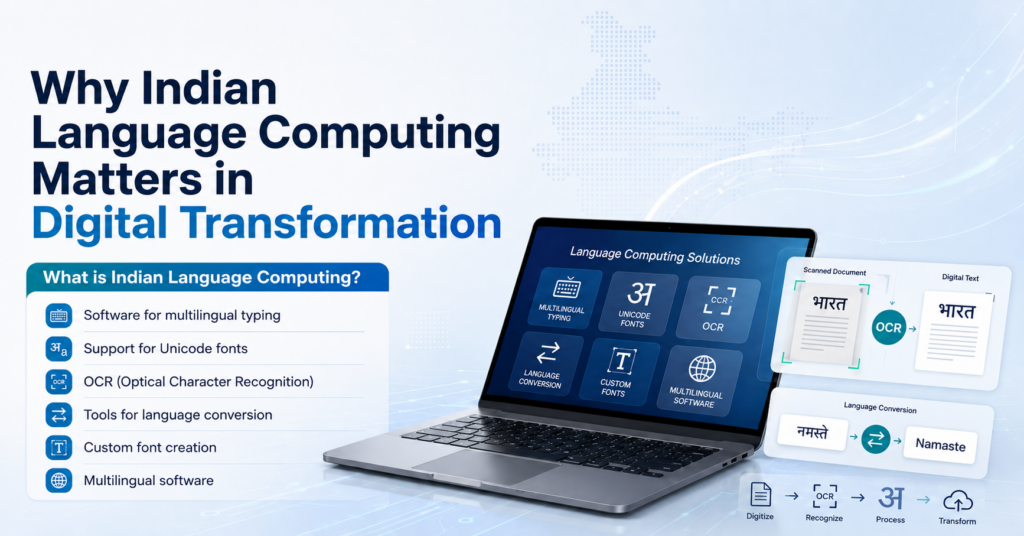
Optical Character Recognition is the process of converting scanned images, photographs, or PDFs of printed or handwritten text into machine-readable, editable text. In English and other Roman-script languages, OCR has existed in mature form for years. But Indic scripts present unique challenges:
- Complex character structures: Devanagari (used for Hindi and Marathi), Bengali, Tamil, Telugu, Kannada, and Gujarati scripts include conjunct consonants, (vowel signs), and ligatures that don’t map neatly to a simple letter-by-letter recognition model.
- Font and print variation: older government records, legal deeds, and printed books often use non-standard fonts, degraded print quality, or handwritten annotations.
- Multilingual documents: Many Indian documents mix two or three languages on a single page — for example, English and a regional language together.
Purpose-built OCR engines trained on Indian scripts solve these problems by recognizing conjuncts and accurately, adapting to multiple font families, and separating text blocks in mixed-language layouts.
The Role of Indian Language Software in Digitization
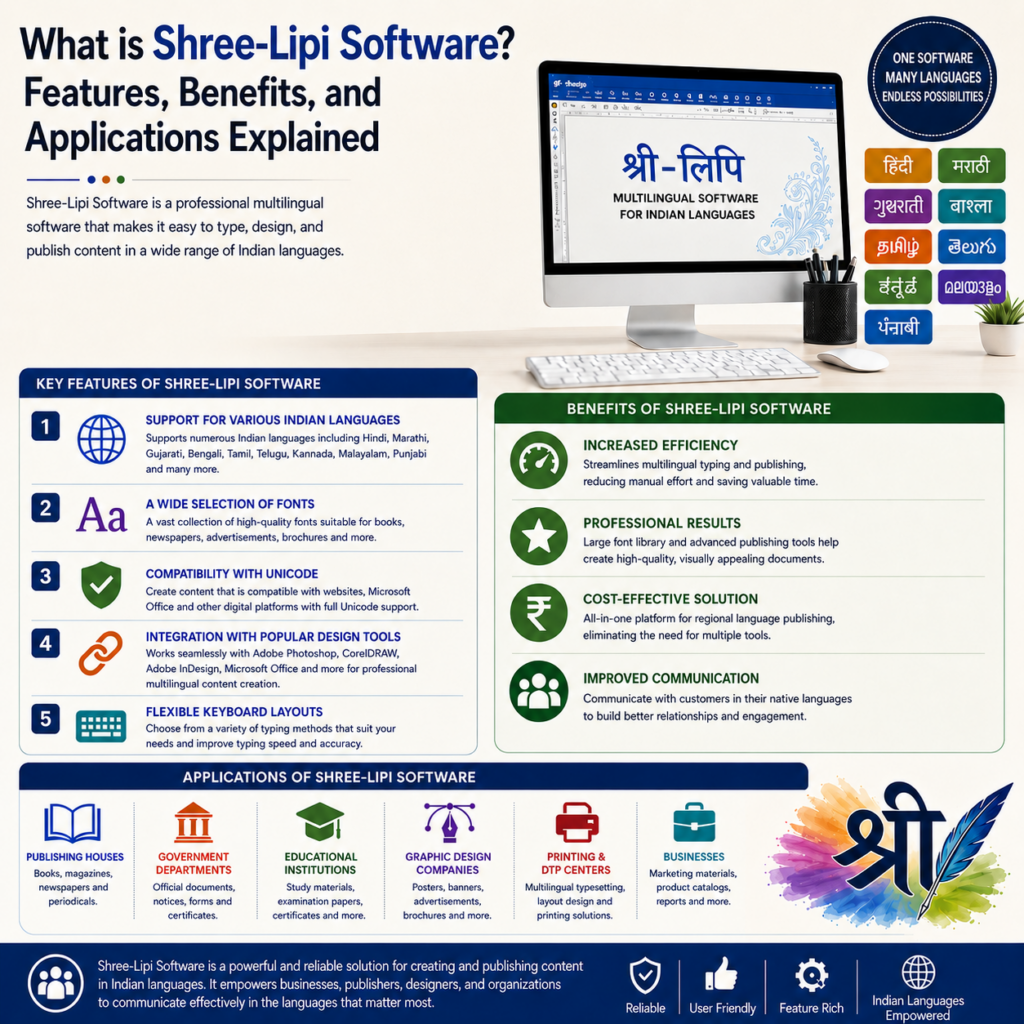
OCR alone converts an image into text, but Indian language software plays the equally important role of making that text usable. This includes:
- Font and encoding conversion: Legacy documents were often typed in proprietary or non-Unicode fonts. Language software converts this content into standard Unicode, making it searchable, shareable, and compatible with modern systems.
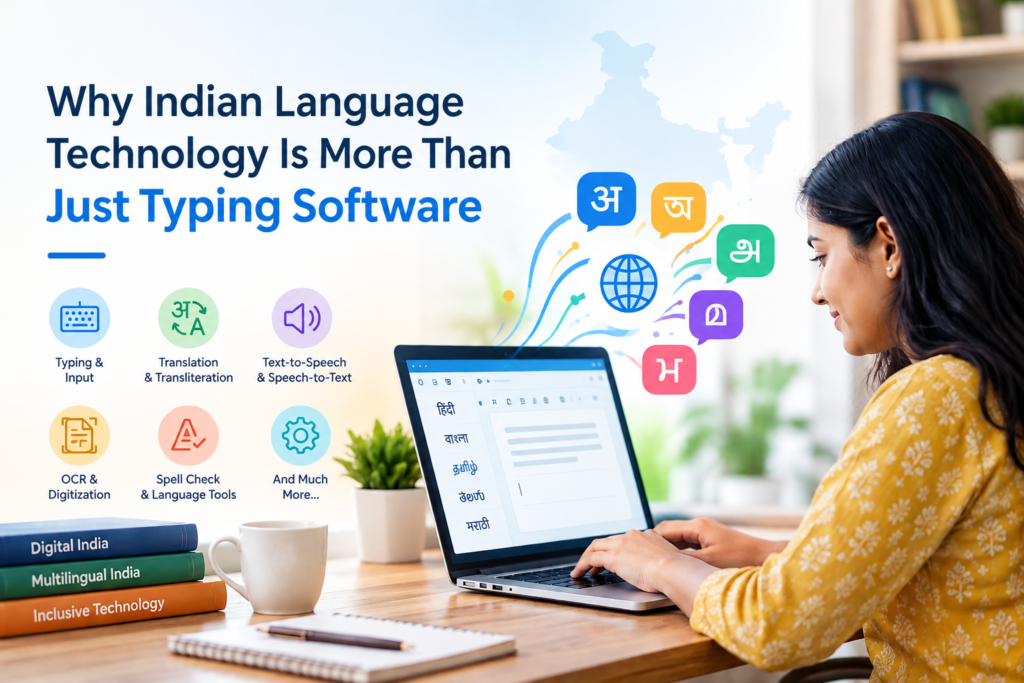
- Editing and formatting tools: Once digitized, regional-language text needs proper editing environments with correct keyboard layouts, spell-check, and typing tools for scripts like Devanagari, Gujarati, Bengali, and more.
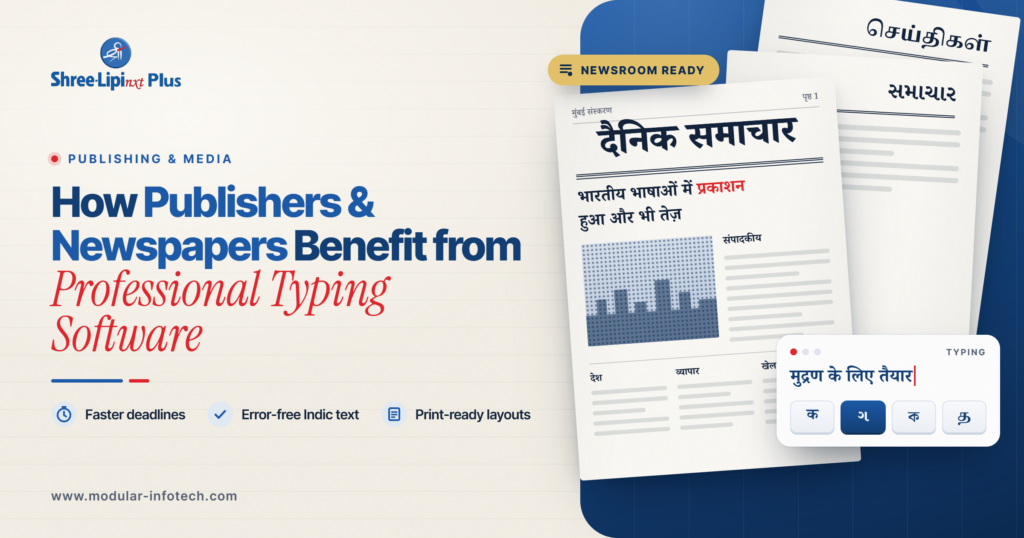
- Publishing and DTP compatibility: Businesses and print houses need digitized content to flow smoothly into desktop publishing and page-layout software for reprints, translations, or digital archives.
Together, form a complete pipeline: scan, recognize, convert, edit, and publish.
Industries Benefiting from Document Digitization
Government and Public Records
Land registries, court records, and municipal archives across India hold decades of paper documents in regional languages. Digitizing these makes records searchable, reduces physical storage needs, and improves public access to services.
Banking and Financial Services
KYC forms, loan applications, and account documents are often filled out in regional languages in semi-urban and rural branches. Digitization speeds up processing and reduces manual data entry errors.
Education and Publishing
Universities, libraries, and publishing houses are digitizing textbooks, research papers, and historical manuscripts written in Indian languages, preserving them for future generations while making them searchable online.
Legal Sector
Old case files, agreements, and property documents in regional languages need to be converted into searchable digital formats for faster retrieval and reference.
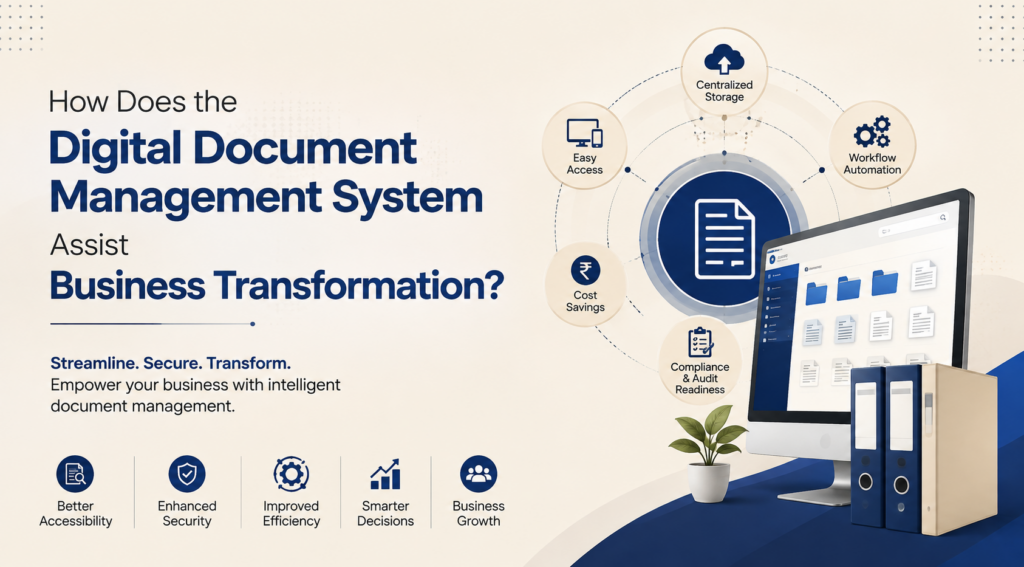
Key Benefits of Modern Document Digitization
- Faster search and retrieval — Find any document in seconds instead of searching physical files
- Reduced storage costs — Cut down on physical archive space and associated overheads
- Better data accuracy — Minimize manual transcription errors
- Improved accessibility — Enable text-to-speech, translation, and cross-department sharing
- Long-term preservation — Protect fragile or aging paper records from permanent loss
What to Look for in an OCR and Language Software Solution
When evaluating a solution for Indian language document digitization, consider:
- Script coverage — Does it support the specific regional languages and scripts your organization needs?
- Accuracy on printed and handwritten text — Test it on your actual documents, not just clean samples.
- Unicode compliance — Output should be in standard Unicode for long-term compatibility.
- Integration with existing workflows — Look for compatibility with your DTP, publishing, or document management systems.
- Font conversion support — Especially important if you’re dealing with legacy non-Unicode typed documents.
- Local language support and training — Vendor support in your working language speeds up adoption.
Conclusion
Document digitization is no longer a luxury for large enterprises — it’s becoming essential for any organization handling regional-language paperwork in India. The combination of accurate OCR for Indic scripts and robust Indian language software gives businesses, government bodies, and institutions a practical path from paper archives to fully searchable, editable digital records. As more organizations recognize the value of preserving and modernizing their regional-language content, investment in the right digitization tools will continue to grow across the country.