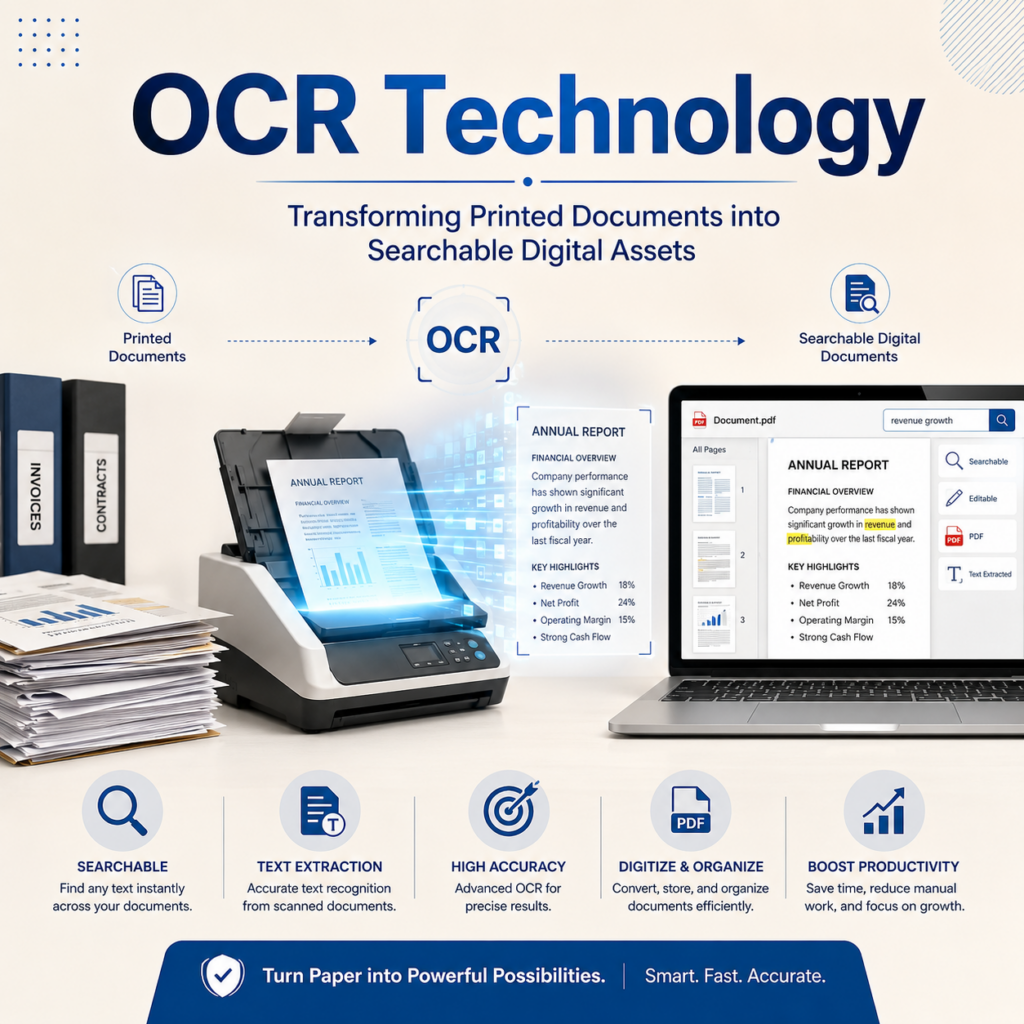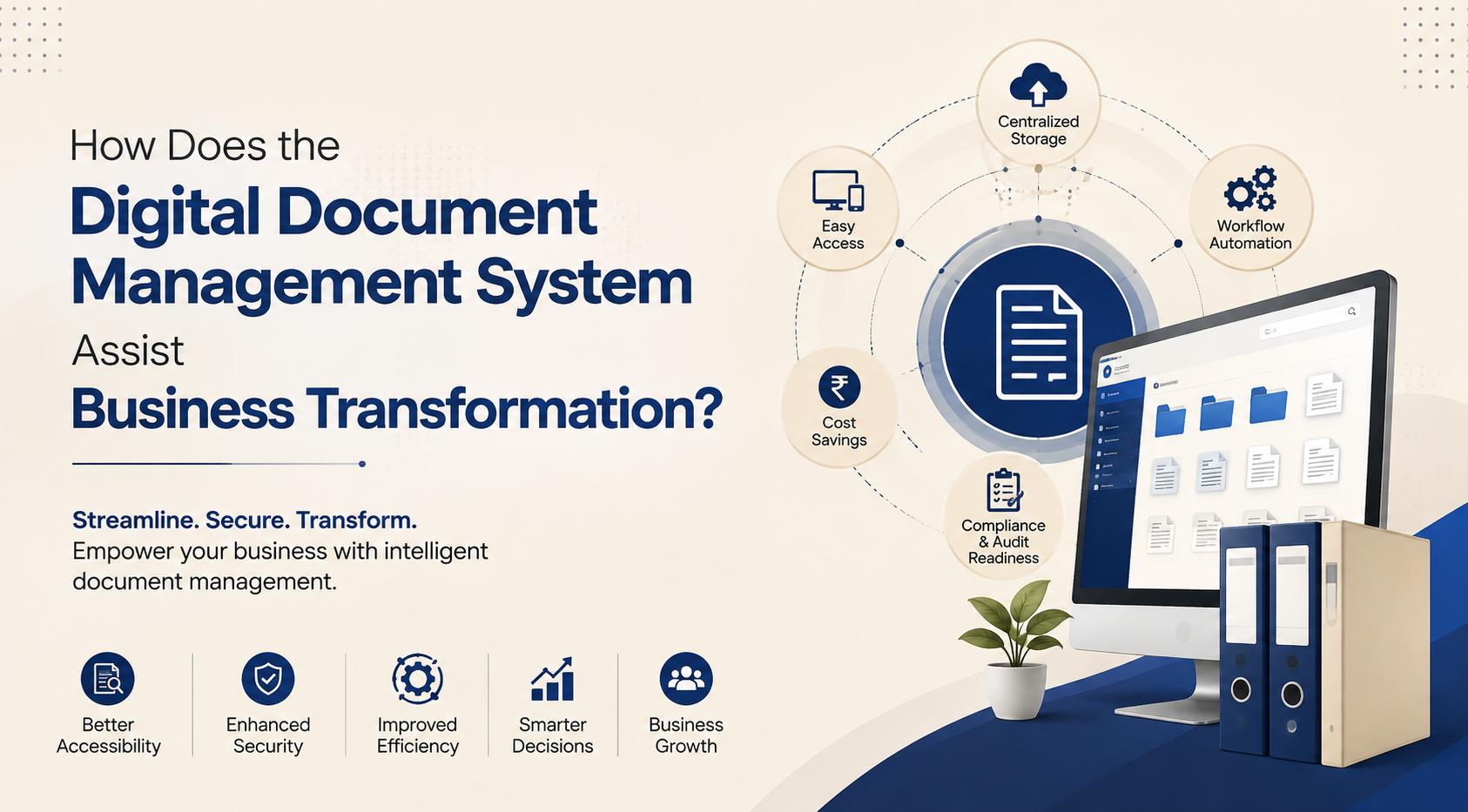
Today all companies are in a race to “go digital” – but digital transformation is not simply about new software and shiny dashboards. And one of the most powerful, but overlooked, enablers of this shift is the Digital Document Management System (DMS).
From less dependency on paper to enabling real-time collaboration, a DMS silently drives many of the changes that make a business truly transformed and future ready. Let me see.
1. Centralized Information for Faster Decision Making
Documents are traditionally scattered across desks, drawers, email threads and personal drives. More often than not, the right file is found by digging through folders, physical or digital, wasting valuable time.
With a digital document management system, it’s all in one secure, searchable repository. Employees can locate contracts, invoices, reports or approvals in seconds, which allows for quicker and more informed decisions across departments.
2. Supporting Remote and Hybrid Work
Workplace flexibility is now part of the business transformation Teams are no longer tied to one office and documents need to be available anywhere, on any device.
This is enabled by a cloud-based DMS that allows authorized users to access files remotely and securely – without compromising the integrity of the data. It’s become a baseline requirement for hybrid work models to run smoothly.
3. Enhancing Data Security and Compliance
Digitalization increases the vulnerability of businesses to data breaches, unauthorized access and compliance risks. A strong DMS handles this by:
Role-based control of access
Version histories and audit trails
Encryption & Backup Security
Ready to Comply with Document Retention Policies
This protects sensitive business data and builds trust with clients, partners and regulators.
4. Automation of Repetitive Workflows
Manual handling of documents such as routing files for approval or tracking versions or renewals is time consuming and prone to human error.
Modern DMS platforms include automation features such as:
Automated approval workflow
Version control
Document expiration or renewal notification
Electronic signatures
5. Enhancing Cross Team Collaboration
Business transformation often depends on how effectively teams collaborate. A DMS allows multiple users to work on the same document at the same time, see changes as they happen, add comments and prevent version conflicts – no more “final_v2_updated_FINAL.docx” files flying around via email.
6. Reducing Operating Costs
There are always some implicit costs associated with paper-based systems, which include costs related to printing, storage space, security, and even staff that needs to manage all those papers. Switching to an electronic document management solution will help reduce those costs along with the organization’s carbon footprint.
After some time, the reduced operating costs will become visible in terms of ROI.
7. Ensuring Scalability
With growth in a business, documentation such as contract papers, HR data, client information, etc. grows exponentially. A DMS system is designed in such a way that the more documentation it processes, the simpler it gets.
Scalability prevents the document management from being a limiting factor in expansion.
Conclusion
Digital transformation is not an event; rather, it is a process of changing the way a company works and interacts. Digital document management system may not be always the first thing people think of when it comes to transformation, but it is an extremely important step. The ability to collect and manage data, automate processes, ensure safety, and support remote work are just a few aspects of DMS.
Transform Your Business with Digital Document Management — Get Started Today!