Digital publishing has transformed the ways in which businesses, publishers, newspapers, educational institutions, and content creators produce and distribute information.
Regardless of whether it’s e-books, web news, digital magazines, or multilingual websites, the demand for high-quality digital content is increasing.
Font conversion tools assist in this by transforming text among various font styles while maintaining readability, uniformity, and compatibility across multiple digital platforms.
For teams that handle content in multiple languages, this technology can conserve time, reduce manual effort, and enhance the efficiency of the publishing process.
What Is Font Conversion Software?
Font conversion software is a digital application that helps you change text from one font style or coding system to another.
This is especially useful for handling legacy fonts, non-Unicode fonts, and Unicode-compatible fonts.
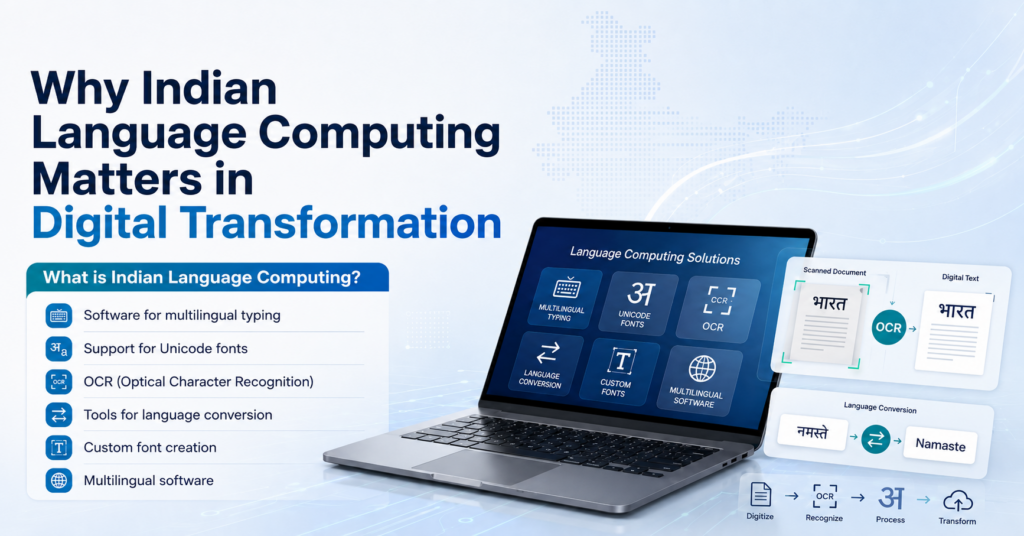
For example, a publisher whose documents are created using traditional Indian language fonts may need to convert them to Unicode to ensure compatibility with modern websites, digital publishing platforms, and applications.
With the right font conversion solution, your organization can ease the transition between different font systems and increase the accessibility of your content in a digital environment.
5 Ways Font Conversion Software Simplifies Digital Publishing
1. Simplifies Multilingual Content Publishing
India boasts a diverse linguistic environment, prompting publishers to frequently develop content in languages like Hindi, Marathi, Gujarati, Bengali, Punjabi, Tamil, and various other regional tongues.
Handling various language fonts by hand can take a lot of time.
Font conversion tools make this process easier by allowing you to convert text between compatible font formats.
2. Helps Convert Legacy Fonts into Unicode
Many newspapers, publishing houses, and organizations continue to maintain vast archives of materials created using outdated typography systems.
These documents may not display correctly on modern websites or digital devices without proper conversion.
Font conversion tools allow you to convert text in existing fonts to a Unicode-compatible format, making it easier to reuse existing content in modern publishing scenarios.
3. Saves Time and Reduces Manual Work
Reentering documents manually in a different font format can take a lot of time and lead to mistakes in spelling or formatting.
Font conversion tools minimize the necessity for repetitive manual tasks by automating the supported conversions. Publishing teams can handle content more effectively and concentrate on editing, proofreading, layout design, and quality of content.
This is especially beneficial for newspapers, magazines, book publishers, and entities that handle substantial amounts of regional-language material.
4. Improves Digital Content Compatibility
Digital publishers share content through websites, PDFs, e-books, mobile apps, and various other digital platforms. Text designed in one font system might not function properly on all platforms.
Software for font conversion can help publishers get legacy content ready for contemporary digital workflows. Nonetheless, accurate results still rely on proper font mapping, adequate font support, and effective text rendering.
5. Supports Efficient Content Reuse
Publishers frequently need to transform existing content into different formats, like turning newspaper archives into online articles or modifying print publications for digital distribution.
Rather than creating content anew, teams can utilize font conversion tools to adjust text for compatibility with subsequent editing and publishing.
Why Font Conversion Software Matters for Indian Language Publishing
Publishing in Indian languages encompasses various scripts, keyboard configurations, font systems, and text-rendering needs. These variations can pose difficulties when content transitions from traditional desktop software to contemporary digital platforms.
Font conversion tools facilitate the transition from traditional publishing processes to modern digital needs.
For instance, a publisher of a Marathi newspaper might possess years of archived material saved in an outdated font format. Transforming compatible content into Unicode can simplify the process of publishing articles online, preserving digital archives, and repurposing information across various platforms.
How to Choose the Right Font Conversion Software
Before selecting a font conversion solution, consider the following factors:
1. Language support: Check whether the software supports the Indian languages and scripts required for your projects.
2. Font compatibility: Confirm that the solution supports your existing legacy fonts and the desired output format.
3. Conversion accuracy: Test representative documents to check character mapping, punctuation, conjuncts, and special characters.
4. Batch conversion: If you manage large volumes of content, look for features that can process multiple documents efficiently.
5. Ease of use: Choose a solution that fits your team’s workflow and requires minimal manual intervention.
6. Unicode support: If your goal is modern digital publishing, verify that the converted content works correctly in your target applications and platforms.
7. Proofreading and quality checks: Always review converted text before publishing, particularly when working with complex scripts or older documents.
How Modular Infotech Helps Simplify Multilingual Publishing
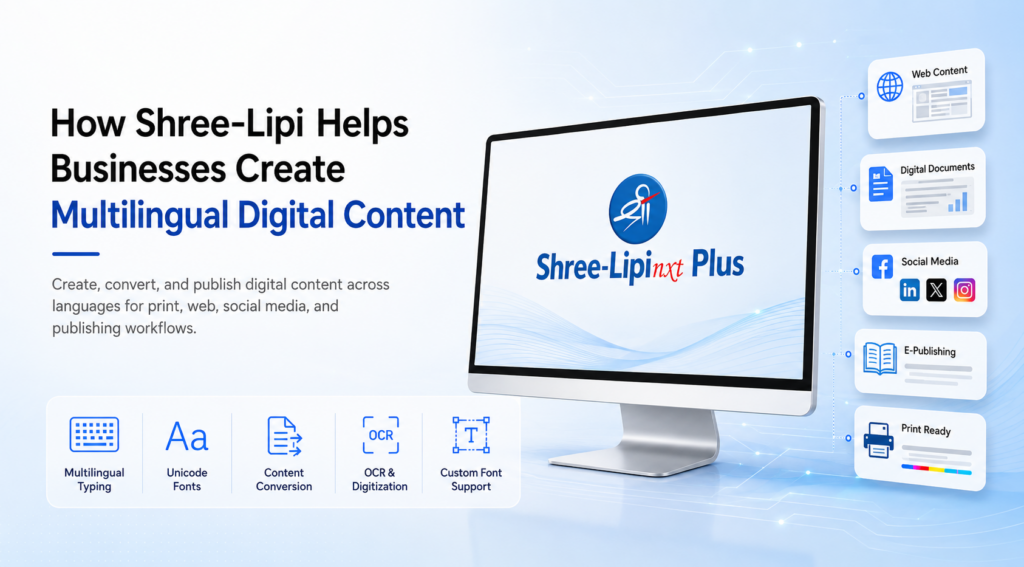
Modular Infotech provides language technology solutions designed to support multilingual typing, publishing, and digital content workflows.
With solutions such as Shree-Lipi and technologies supporting Indian language content, businesses and publishing professionals can work more effectively with regional-language text.
The right font and language technology can help organizations manage multilingual content, improve productivity, and prepare information for different publishing requirements.
Whether you are a newspaper publisher, book publisher, educational institution, or business working with Indian languages, choosing suitable language technology is an important step toward a more efficient digital publishing process.
Conclusion
Font conversion software plays an important role in simplifying digital publishing by helping organizations manage legacy fonts, prepare multilingual content, reduce repetitive work, and improve compatibility with modern platforms.
For publishers working with Indian languages, font conversion can make existing content easier to reuse and support the transition toward Unicode-based digital workflows.
Frequently Asked Questions (FAQs)
1. What is font conversion software used for?
Font conversion software helps convert text between supported font formats or encoding systems, making it easier to reuse content across different applications and publishing platforms.
2. Why is font conversion important for digital publishing?
It helps publishers manage legacy documents, prepare multilingual text for modern platforms, reduce manual retyping, and improve content compatibility.
3. Can font conversion software convert legacy fonts to Unicode?
Yes, compatible conversion software can convert supported legacy-font text into Unicode. The results depend on the source font, encoding, and available conversion mappings.
4. Is font conversion software useful for Indian languages?
Yes. It can be especially useful for publishers and organizations working with Indian languages such as Hindi, Marathi, Gujarati, Bengali, and Punjabi.
5. What is the difference between font conversion and Unicode conversion?
Font conversion may involve changing the font used to display text, while Unicode conversion involves converting the underlying character representation into Unicode. Simply changing a font does not necessarily convert the text encoding.