Have you ever tried opening an old Marathi document and found that the text looks completely different from what you expected? This is a common problem for people working with legacy Indian-language fonts. Many older documents were created using Shree-Lipi and other traditional font systems that may not work smoothly with modern applications.
If you want to publish Indian-language content online, share documents, or manage digital records, converting Shree-Lipi to Unicode can make your work much easier.
What Is Shree-Lipi to Unicode Conversion?
Shree-Lipi is an Indian-language software and font technology widely used for typing, printing, and publishing content in languages such as Marathi, Hindi, and other Indian languages.
Unicode is a universal character encoding standard that allows text to work across different devices, browsers, and software applications.
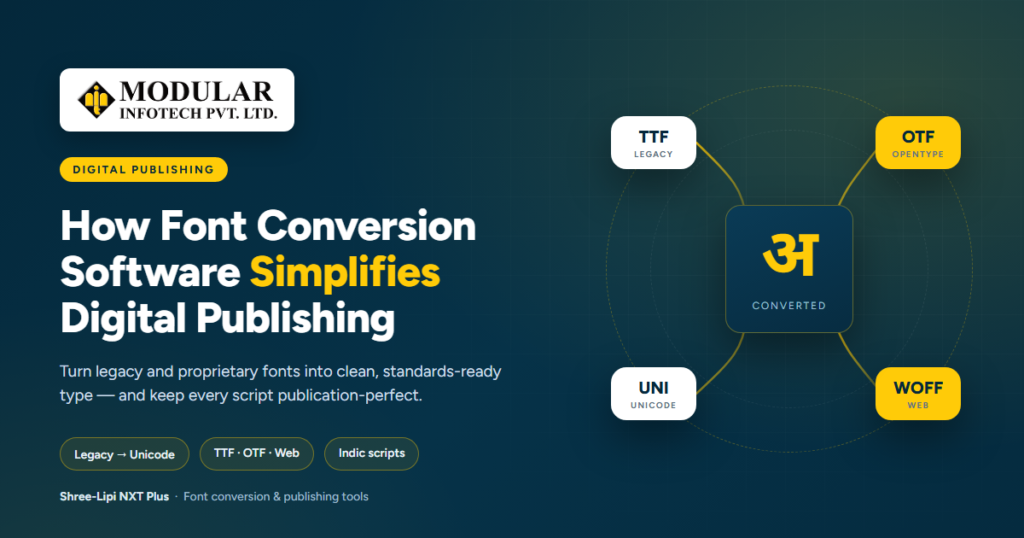
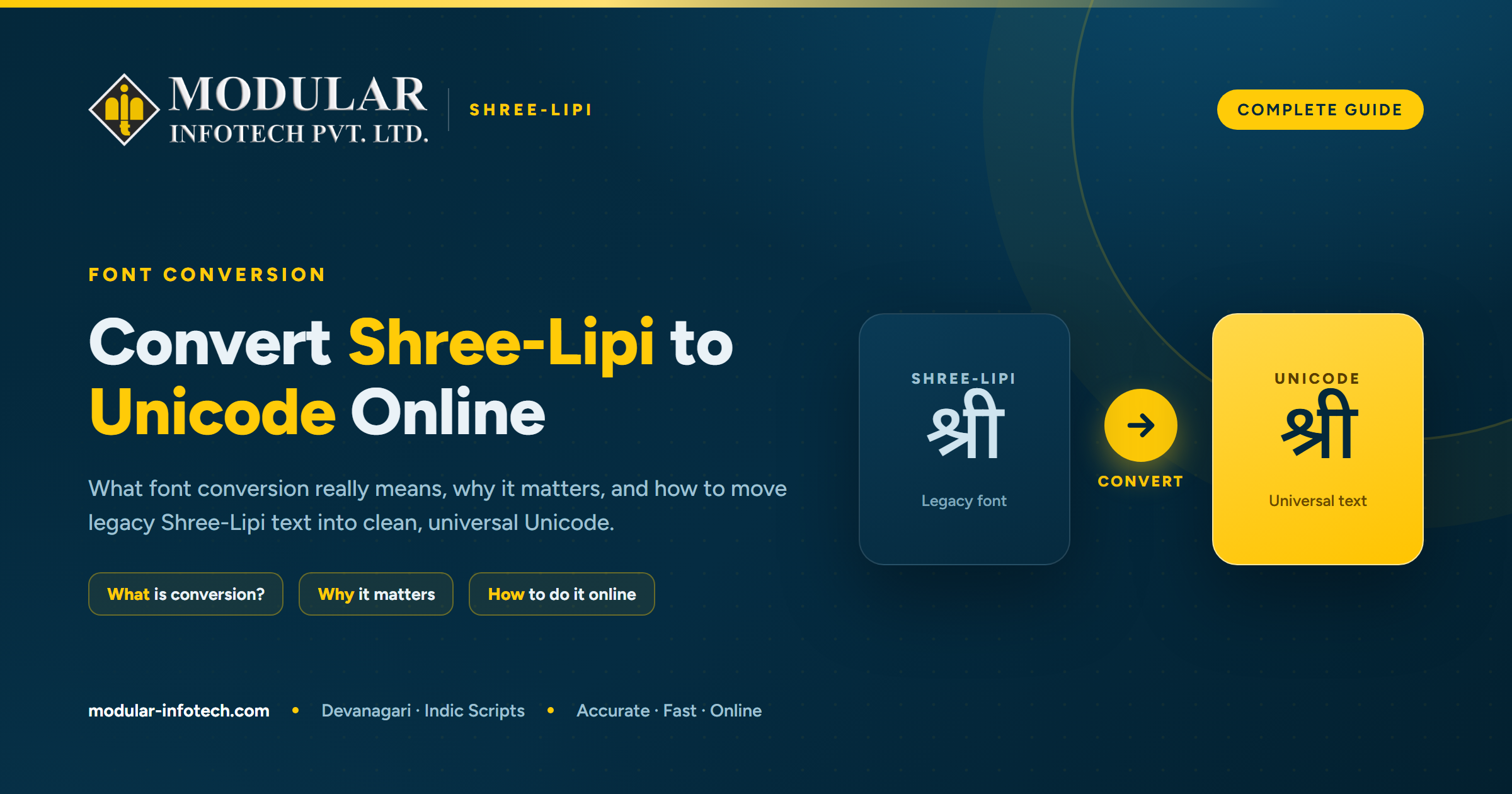
Shree-Lipi to Unicode conversion transforms legacy font-encoded text into Unicode text, making it easier to use Indian-language content in modern digital environments.
For example, a Marathi document created using a legacy font may display correctly on one computer but appear unreadable on another. Converting the text into Unicode can help resolve these compatibility issues.
Why Is Shree-Lipi to Unicode Conversion Important?
Businesses, publishers, educational institutions, and government organizations often have large collections of documents created using legacy fonts.
Converting these documents into Unicode offers several benefits:
- Better compatibility: Use Indian-language text across modern applications and platforms.
- Easy website publishing: Display Marathi, Hindi, and other Indian languages without requiring visitors to install specific legacy fonts.
- Improved searchability: Unicode text can be indexed by search engines when implemented correctly.
- Simplified document sharing: Copy and share text between supported applications more reliably.
- Digital document preservation: Convert old documents into formats suitable for modern digital archives.
For organizations managing years of Indian-language content, Unicode conversion can help preserve valuable information while improving accessibility.
How to Convert Shree-Lipi to Unicode Online
Converting Shree-Lipi text into Unicode requires a compatible font conversion tool.
First, identify the original Shree-Lipi font or encoding used in your document. Next, extract or copy the text from the original file. Use a converter that supports the source encoding to transform the legacy text into Unicode.
Once the conversion is complete, review the output carefully. Check Marathi characters, vowel signs, conjunct consonants, and punctuation to ensure the text is accurate.
After verification, the converted content can be used in websites, digital documents, emails, and other modern applications.
Remember, simply changing the font does not convert legacy text into Unicode. The underlying character encoding must also be transformed.
How Modular Infotech Supports Indian-Language Technology
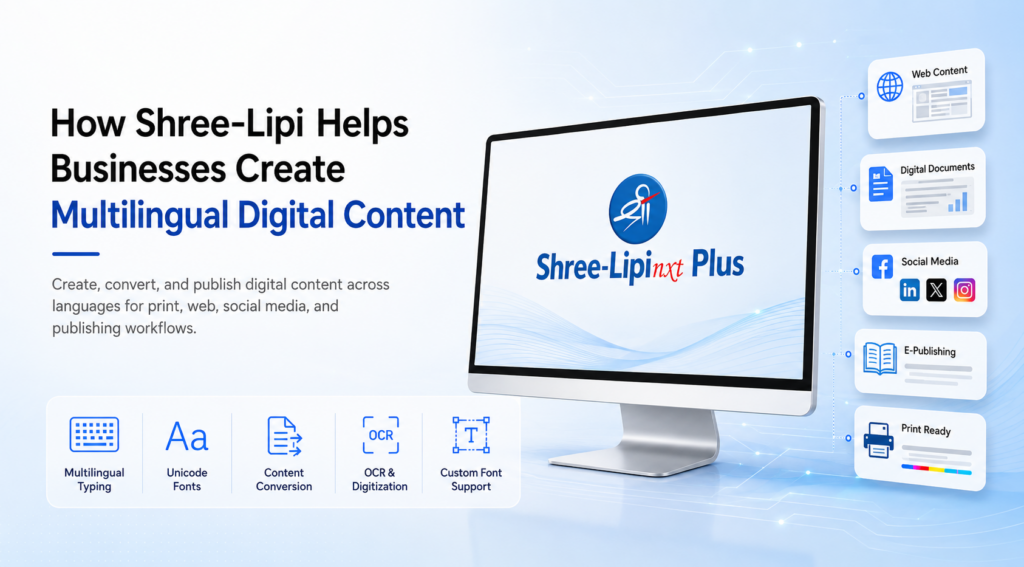
Modular Infotech has extensive experience in Indian-language software and font technology. Its Shree-Lipi solutions have supported multilingual typing, publishing, and digital content creation for many years.
For businesses working with legacy documents, understanding font compatibility and Unicode conversion is an important step toward modernizing their content workflows.
Whether you are a publisher, business owner, or individual managing old Marathi documents, the right font conversion approach can help make your content more accessible and easier to reuse.
Conclusion
Converting Shree-Lipi to Unicode is more than a technical process. It helps preserve Indian-language content and makes it suitable for today’s digital world.
From website publishing to document digitization, Unicode conversion can simplify how businesses manage and share multilingual information.